A garage floor takes more abuse than most people admit. Hot tires. Road salt. Oil drips. Wet footprints. Kids running in and out. A lawnmower that leaks. A pressure washer session that turns the whole slab into a skating rink. Bare concrete handles this in the worst possible way. It dusts, stains, and holds grime in the pores. And when it gets wet, it can get slick, especially if it has old sealers or smooth troweled areas.
A durable, slip-resistant coating is not about making the garage "pretty." It is about getting control over the surface so it works like a floor instead of a permanent cleaning problem. Resin Flooring Experts, LLC focuses on specialty concrete finishes like epoxy coatings and other high-performance systems. They talk about experience, problem solving, and attention to detail. That combination is exactly what you want in a garage because garages are where flooring failures show up fast.
Slip resistance is not just a box to check. A garage is a wet zone even if you never wash a car inside.
| Common "Wet" Situation | Risk Factor |
|---|---|
| Rainwater & Snow Melt | Dripping off cars, pooling under doors, slush mixed with salt. |
| Tracking | Wet shoes and sandals tracking water from the driveway. |
| Condensation | Humidity in certain climates, especially on cool slabs. |
| Cleaning | A quick rinse of the floor that leaves a thin film of water. |
Smooth concrete can be surprisingly slick when it has dust, tire residue, or even a tiny amount of oil. Some glossy coatings can also be slippery if the system is chosen for shine instead of traction. So the real goal is balance: a coating that is sealed and easy to clean, but built with texture and grip where it makes sense.
A long-lasting garage floor is not "one coat of epoxy." It is a full system installed on properly prepared concrete. Resin Flooring Experts, LLC positions itself around specialty finishes and long-term performance, and they call out careful preparation and clean, precise work. That is not cosmetic talk. Prep and process are why floors last.
Most of that is preventable. But only if the contractor treats the slab like its own project, not like a blank canvas.
Garages are notorious for moisture surprises. Concrete can look dry and still be emitting moisture vapor. If a coating system is not compatible with that, you can get delamination, blistering, or cloudy discoloration.
There are different ways to build a garage floor system. The right one depends on how you use the space and what you want it to look like. But a durable, slip-resistant system usually includes these components:
This is where most DIY jobs and bargain installs fall apart. Coatings need a concrete profile to bond. Good prep usually includes grinding and thorough cleaning. It also includes edge work, because edges are where peeling often starts.
Garages often have hairline cracks, spalled areas near the garage door, old anchor holes, or low spots that hold water. If you coat over damage without addressing it, the damage does not disappear. It becomes visible later, or it becomes a weak point.
This is where experience matters. Not every slab needs the same primer. Some slabs are dense and need a different approach than porous, older slabs. If moisture is present, primer choice becomes even more critical.
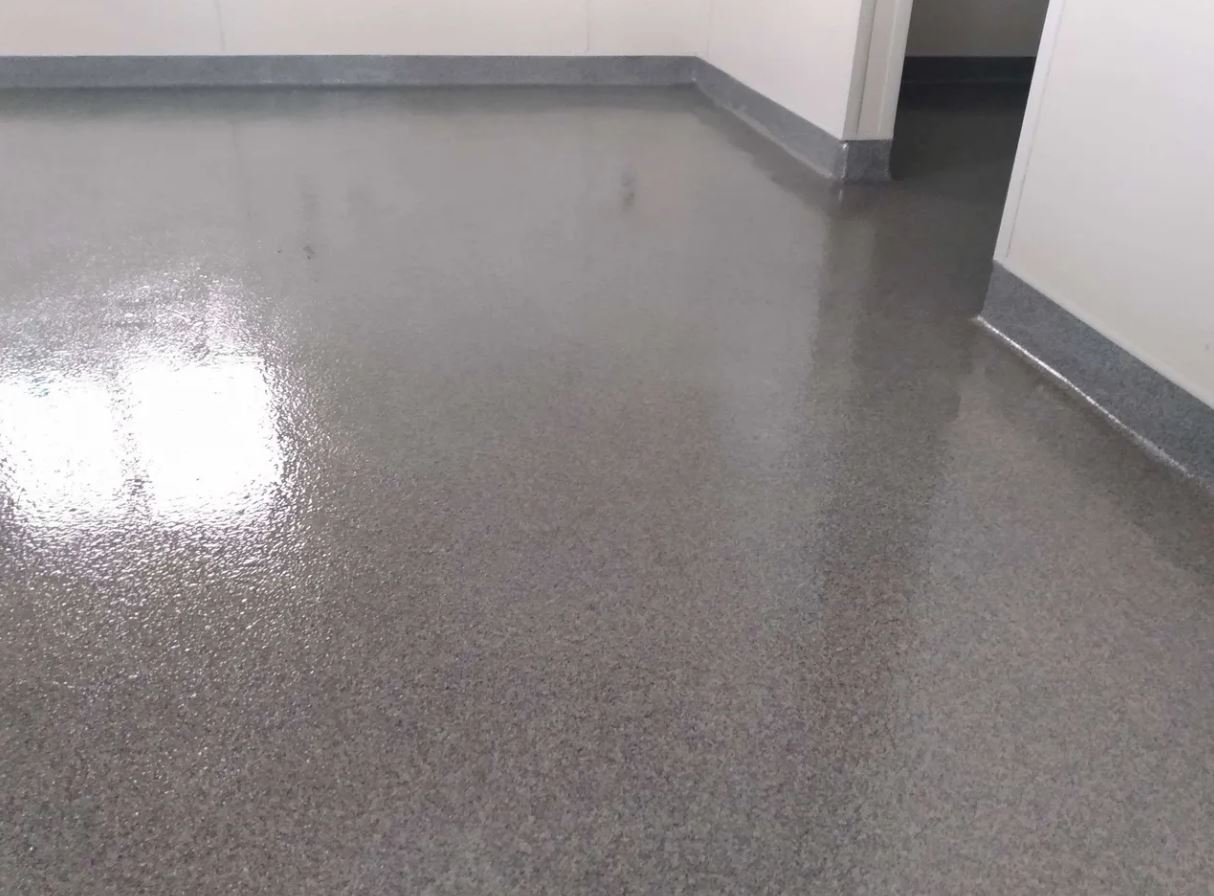
Slip resistance can be achieved several ways: textured topcoat using fine aggregates, full broadcast flake systems, quartz systems, or targeted traction zones. A floor can be too aggressive, so traction should be intentional, not random.
The topcoat controls abrasion resistance, chemical resistance, and stain resistance. Garages deal with tire plasticizers, oil, gasoline drips, fertilizers, and road salts. The topcoat needs to be chosen for that environment.
Based on the way they describe their work, they lean into a few things that line up with what homeowners actually need for garage floors:
| Good Times to Install | Times to Pause & Diagnose |
|---|---|
| After concrete has cured properly on new builds. | If the garage has constant water intrusion under the door. |
| When reorganizing or converting to a home gym/workshop. | If you see efflorescence (white mineral deposits). |
| Before winter to stop salt and slush staining. | If an old coating already failed (need to find out why). |
| If there are major cracks or spalling needing restoration. |
This is where homeowners usually get frustrated. Because once a floor starts failing, you cannot "touch up" your way out.
If you want a durable, slip-resistant garage floor, ask questions that force real answers:
View Flooring Contractor Near Me in a full screen map